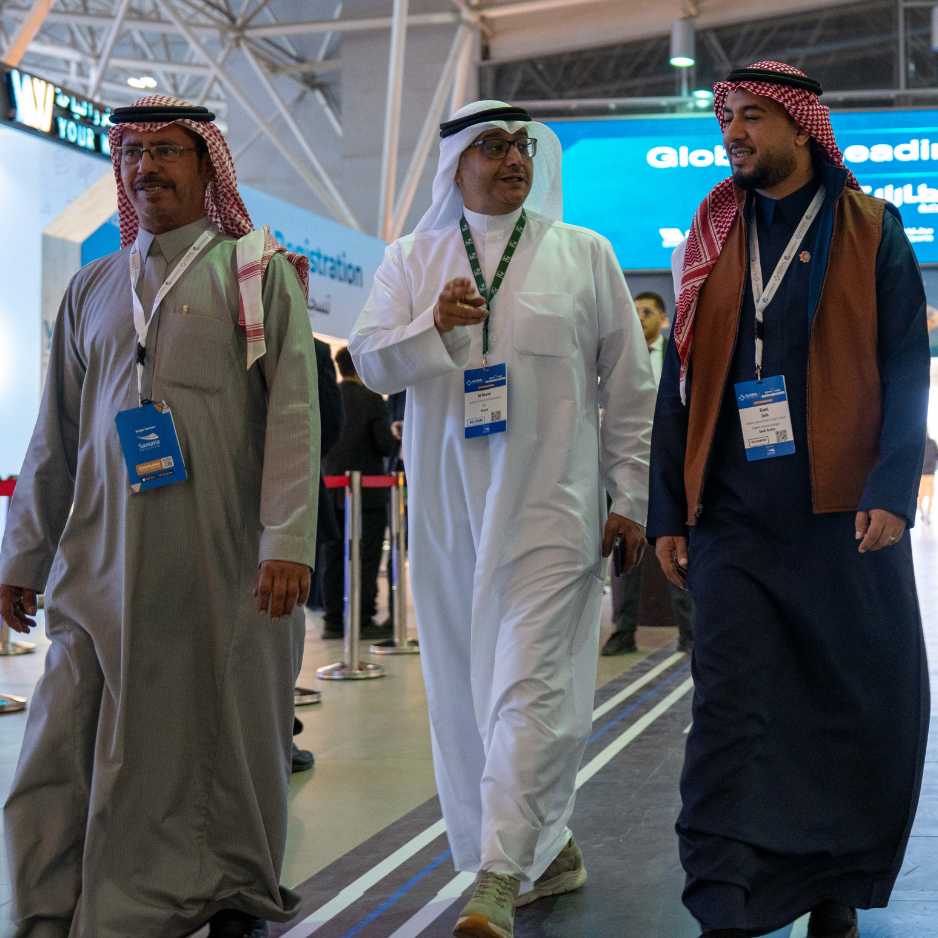
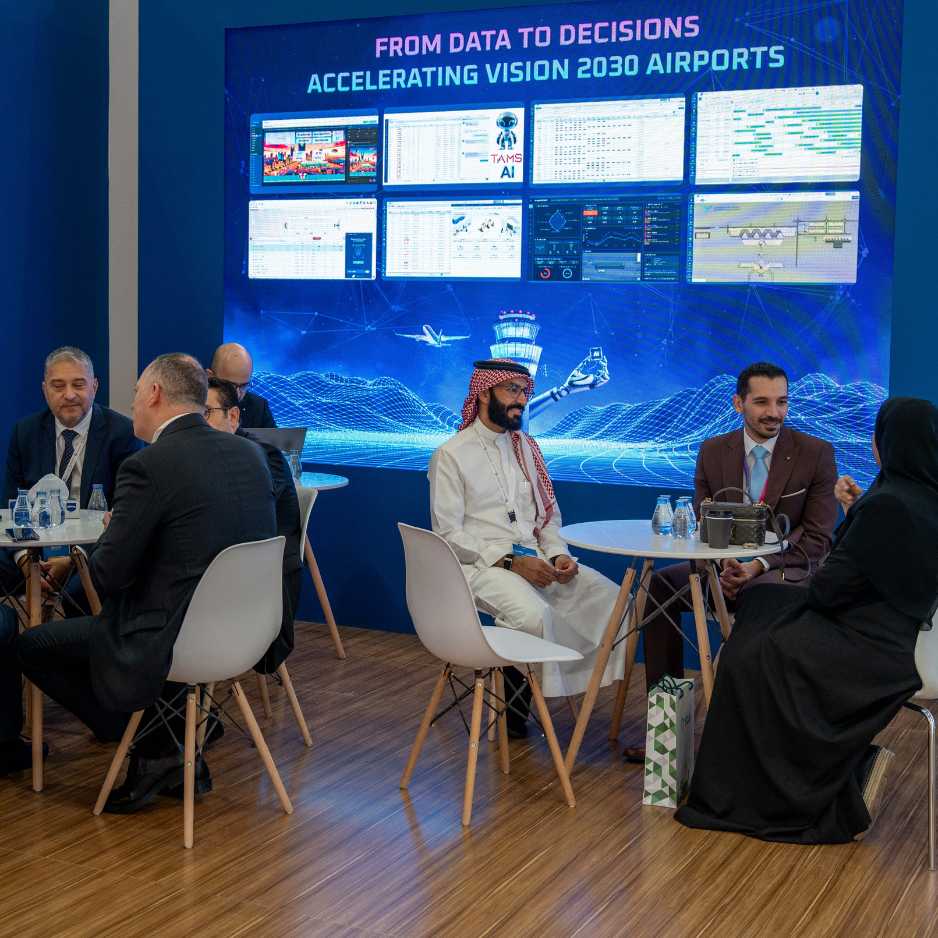
Aviation Leaders Network is a curated editorial initiative endorsed by Global Airports Forum, featuring insights from aviation leaders driving innovation and excellence across the aviation ecosystem.

Key Takeaways
Build Smarter, Not Just Bigger
Saudi Arabia’s aviation growth cannot be supported by terminal expansion alone. Smarter operations, digital technologies, and process optimisation will be just as critical to handling 330 million passengers by 2030.
Connected Systems Create Capacity
Real-time data sharing, AI, biometrics, and integrated airport systems can significantly improve passenger flow, reduce delays, and increase capacity without building new infrastructure.
Operational Intelligence Powers Future Airports
The airports that succeed will be those that coordinate airlines, airports, border agencies, and baggage systems in real time—transforming technology investments into seamless passenger experiences.
In 2025, Saudi airports handled 140.9 million passengers, up 9.6% in a single year. According to GACA’s own figures, several of the Kingdom’s largest airports ran above their design capacity to do it, some by more than a third.
That deserves more credit than it gets. Passengers still made their flights. Bags still made the belt.
It should also change how we talk about capacity. We describe capacity as a wall. It isn’t. It’s an assumption: an estimate of what a building can move, based on the processes, staffing and technology frozen in place the day the architect signed off. The opportunity now is to stop beating that number by accident and start designing for it on purpose.
The arithmetic that makes this urgent
Saudi Arabia is targeting 330 million passengers a year by 2030. King Salman International Airport in Riyadh is being built to carry 100 to 120 million of those. So the Kingdom’s largest infrastructure project covers a large share of the gap, and the rest will be carried by airports already open and already running hard. Concrete is doing its part and doing it fast. It just can’t do all of it, anywhere.
Shape matters more than size
Most Gulf hub capacity was built for people passing through. The Kingdom’s growth is built on people coming to it: 150 million visitors targeted by 2030, a near-doubling of Umrah pilgrims, Expo 2030 in Riyadh, the FIFA World Cup in 2034.
A transfer passenger never clears immigration and never touches a baggage carousel. A visitor does both. So the pressure lands on the two processes no airport controls on its own: the border and the bag.
That demand also arrives in waves. Hajj concentrates more than a million pilgrims into a six-week window. Expo runs six months. A World Cup match day is a single afternoon. You can’t build a permanent terminal for a peak that lasts six weeks, and nobody should try.
So the design question of the next decade isn’t “how many passengers a year?” It’s “how do we handle the shape of the year?” Every airport has that problem. Saudi Arabia has it at the highest amplitude.
The design question of the next decade isn’t ‘how many passengers a year?’ It’s ‘how do we handle the shape of the year?
Baggage already proved this works
The industry ran this experiment in 2025. Mishandled baggage rates fell 23% and volumes dropped 19% to 24 million bags, both below pre-pandemic levels for the first time, in a year when passenger numbers hit a record 5 billion.
That didn’t come from one new machine. It came from real-time data sharing, AI routing, biometric bag drop and connected devices finally working as one system instead of six. The pieces were already installed.
The gap that remains makes the same point. Mishandling still costs $6.3 billion a year, around $260 a bag, against roughly $8 of net profit per passenger. Five bags wipe out the profit on a flight. And 39% go astray at transfers, in the handoff between organizations. Not inside a system. Between them.
The constraint isn’t capability. It’s coordination.
Aviation invested a record $50.8 billion in technology in 2025. But only 48% of airports plan to share or stream data across their own internal silos by 2027.
The industry has bought the instruments. It hasn’t yet agreed on the music.
That’s the good news if you’re looking for capacity you haven’t paid for. The most valuable thing on your site this year may be a connection between two systems you already own.
That didn’t come from one new machine. It came from real-time data sharing, AI routing, biometric bag drop and connected devices finally working as one system instead of six.
Three shifts worth making now
Measure capacity in minutes, not square meters.
Biometric border control is live at 54% of airports, heading to 83% by 2028. Every minute you take out of a border queue at peak is floor space you don’t have to build.
Treat identity as shared infrastructure, not a product each party buys separately.
A passenger verified once should be recognized by the airline, the airport and the border agency without repeating themselves. The technology is ready. The agreements take longer, so start those now.
Design for variability, and let the bag travel on its own.
Space that serves check-in in the morning and pilgrim processing in the evening beats space that does one job well. Baggage is heading toward tagging at home, dropping them off outside the airport, and bags that don’t fly on the same aircraft as their owner. Design your 2032 terminal for that world.
What Saudi Arabia is really building
If the Kingdom moves 330 million passengers a year through a network that carried 140.9 million in 2025, it will have proven that an 18-month operational cycle can outpace a five-year construction cycle. That template exports to every fast-growing market facing the same challenge with a fraction of the budget.
Terminals will still be built, and they should be. But the airports that lead this decade won’t be the ones with the most floor space. They’ll be the ones where a gate change, a turnaround, a border queue and a bag are all visible to everyone who can act on them, at the same moment.
That’s not a technology program. It’s an operating model, and it’s the one that gets a passenger from the plane to the street without ever thinking about how.
Leadership Articles
FEATURED ARTICLE
Convergence of Digital Twins and Proactive Compliance in Modern Airports
5 min read
FEATURED ARTICLE
From Fragmented Operations to Connected Airside Intelligence
5 min read
FEATURED ARTICLE
One Platform. Smarter Passenger Communication for the Airports of Tomorrow.
5 min read
FEATURED ARTICLE
Saudi Arabia needs to move 190 million more passengers by 2030. Most of them won’t arrive in a new building.
5 min read



























Be Part of the Fifth Edition
Join the companies that continue to choose Global Airports Forum as their platform for industry engagement, brand visibility and business growth.
Contact The Team Today
Daksha Patel – daksha@nicheideas.net | +971 56 690 7668
Arun Veetil – arun@saudiairportexhibition.com | +971 52 499 4488