
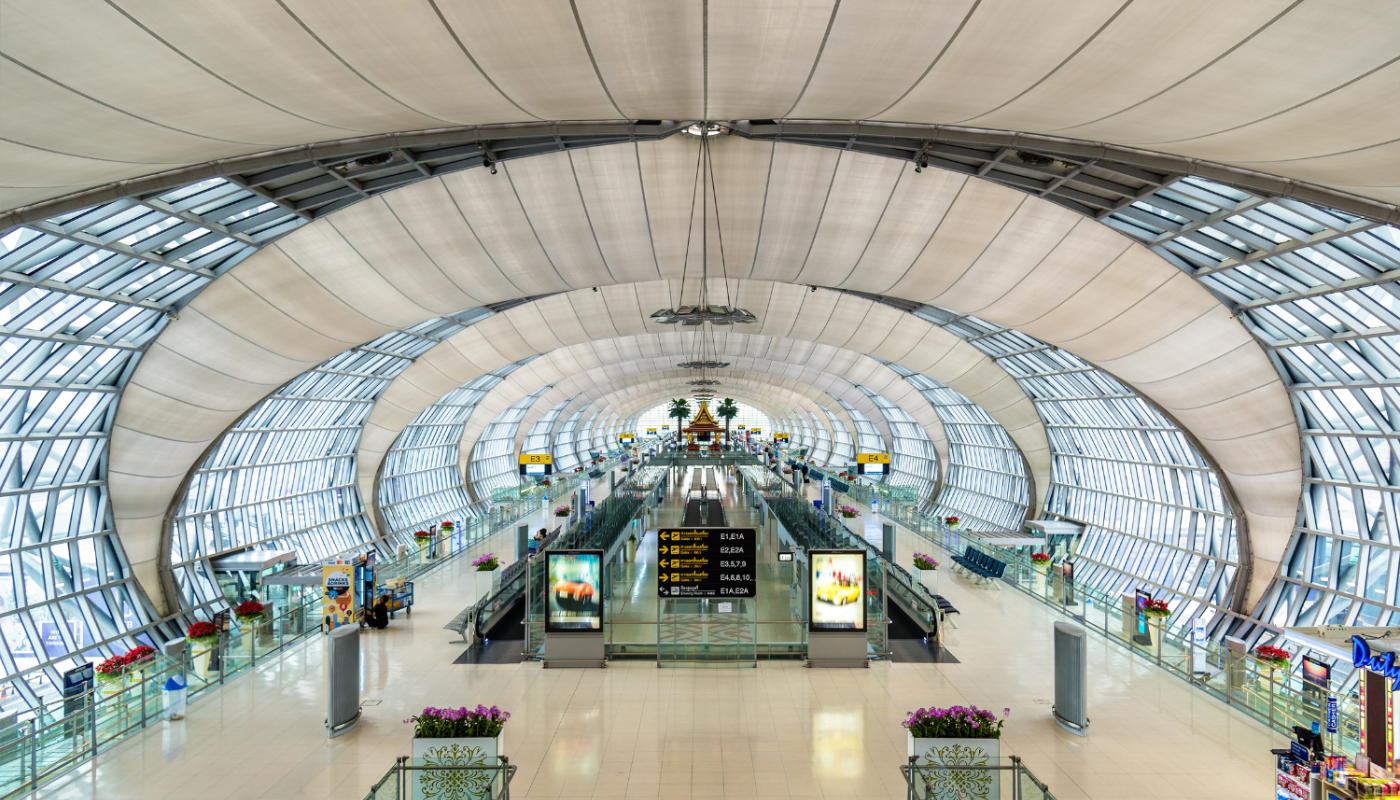
As aviation demand accelerates across the Middle East, airports are evolving into sophisticated, interconnected ecosystems that extend far beyond their traditional role as transport hubs. From accommodating record passenger growth (anticipated to triple from current levels to 1.1 billion by 2040) embracing emerging technologies and meeting ambitious sustainability targets, the airports of tomorrow must be designed with resilience, flexibility and innovation at their core.
The scale of airport development currently underway – particularly across Saudi Arabia and the rest of the GCC – is unprecedented. The overall GCC airport investment pipeline is anticipated to exceed $182 billion, a figure driven by the region’s ambition to develop a string of aviation mega hubs. New greenfield developments, terminal expansions and airside modernization projects are reshaping the regional aviation landscape, creating opportunities to rethink how airport infrastructure is planned, built and operated for decades to come.
Rather than simply expanding capacity, today’s airport projects are focused on creating future-ready environments that enhance operational performance while delivering seamless passenger experiences.
Designed for growth from the outset
Airports are under increasing pressure to accommodate growing passenger volumes without compromising efficiency. This has shifted design priorities towards flexible, scalable infrastructure that can adapt to changing airline requirements, evolving technologies and future demand.
Terminal design is becoming increasingly modular, allowing airports to expand or reconfigure facilities as operational needs evolve. Airside planning is also adapting, with greater emphasis on optimizing aircraft movements, improving turnaround times and supporting larger, more diverse fleets.
For rapidly growing hubs, effective master planning has become essential. Long-term infrastructure strategies must balance immediate operational requirements with future expansion, ensuring that investments made today continue to deliver value as passenger numbers increase.
Saudi Arabia’s King Salman International Airport exemplifies this long-term approach. Designed to become one of the world’s largest airports, its meticulous masterplan outlines how this new hub will comfortably accommodate 100 million passengers annually by 2030, rising to 185 million by 2050, while handling 3.5 million tons of cargo each year. These ambitious targets illustrate why scalable master planning and phased infrastructure delivery have become central to airport design.
Passenger-centric experiences matter more than ever
The latest generation of GCC airport terminals are increasingly being planned around passenger flows, using data and behavioral analysis to reduce congestion, simplify navigation and improve comfort throughout the journey. From intuitive wayfinding systems and automated processing to enhanced retail environments and premium lounges, design is playing a critical role in creating more enjoyable and efficient travel experiences.
Hamad International Airport in Doha has become a global benchmark for passenger-centred design. Its spacious terminal architecture, intuitive wayfinding, premium lounges, curated retail offering and integrated art installations demonstrate how thoughtful design can elevate both the traveler experience and an airport’s international reputation. Last year, the airport unveiled its state-of-the-art Concourses D and E, which feature cutting-edge self-boarding systems, a ush indoor tropical garden where visitors can unwind, and 2,700 square meters retail space offering an exceptional range of shopping and dining experiences.
These are highly innovative airports that fundamentally understand the need to shift consumer thinking from the traditional mindset of merely tolerating their time in the airport to actively enjoying it. At the very least, their airport transition should be entirely seamless and without inconvenience from start to finish. This is the bar to entry for any airport seriously aiming to secure itself a genuinely “smart” reputation.
Ready for anything – Embedding resilience into airport infrastructure
Future-ready airports must be capable of adapting to operational disruption, evolving security requirements and changing regulatory environments. Increasingly, resilience is being embedded into airport design from the earliest planning stages, ensuring that facilities can respond quickly to both expected and unforeseen challenges.
This includes integrating security seamlessly into terminal layouts, designing flexible operational spaces, and developing infrastructure that supports business continuity while maintaining high levels of passenger service. Operational efficiency and resilience are no longer separate objectives – they are now fundamental design principles.
The ongoing expansion of Al Maktoum International Airport (Dubai World Central) reflects this philosophy. Backed by a $35 billion expansion programme, the airport is being designed around operational flexibility, resilient infrastructure and scalable airside operations that will support future growth while maintaining efficiency.
The Green Wave needs airport sustainability by design
Environmental performance has become another defining priority for airport infrastructure projects worldwide. Across new developments and redevelopment programmes, airports are investing in energy-efficient buildings, sustainable construction materials and renewable energy integration as the GCC aviation industry needs to play its part in supporting the wider net-zero ambitions of its respective host countries.
Sustainability is also influencing master planning decisions, from water management and waste reduction to climate resilience and future-proof infrastructure capable of adapting to changing environmental conditions. By embedding sustainability into every stage of design and construction, airports can reduce long-term operating costs while meeting increasingly ambitious environmental targets.
Abu Dhabi’s Zayed International Airport illustrates how sustainability can be integrated into large-scale airport development. The airport’s landmark Terminal A (developed through an investment of around $3 billion) combines energy-efficient building systems, extensive daylight optimization and intelligent environmental controls, demonstrating that environmental performance and operational excellence can be delivered at scale.
Preparing for the future of mobility
As urban mobility evolves, airports are preparing to integrate new modes of transport, including high-speed rail, metro systems, autonomous vehicles and Advanced Air Mobility (AAM), including electric vertical take-off and landing (eVTOL) aircraft.
Designing effective multimodal transport hubs will be essential for improving accessibility, reducing road congestion and supporting more connected passenger journeys. This requires close collaboration between airport authorities, transport planners, infrastructure developers and technology providers to ensure future mobility solutions can be integrated seamlessly into airport master plans.
NEOM Bay Airport offers a glimpse into this next phase of airport development. As part of Saudi Arabia’s wider NEOM project, the airport is being positioned within a highly connected mobility ecosystem that aims to integrate aviation with smart cities, autonomous transport and future mobility concepts, providing valuable insights into how airports may evolve over the coming decades.
Digital planning gives rise to truly smart airport infrastructure
Digital twins, Building Information Modelling (BIM), predictive analytics and AI-driven planning tools are enabling stakeholders to simulate airport operations long before construction begins. These technologies provide valuable insights into passenger movement, asset performance and operational efficiency, allowing better-informed decisions throughout the design process.
Once operational, connected infrastructure and real-time data continue to support predictive maintenance, resource optimization and more responsive airport operations. As airports become increasingly data-driven, digital infrastructure is becoming just as important as physical infrastructure.
Bahrain International Airport demonstrates how digital transformation is becoming embedded within airport operations. Its $1.1 billion terminal development increased passenger capacity to 14 million annually while integrating smart passenger processing, advanced baggage handling and digital operational platforms that improve both efficiency and the passenger journey.
Shaping the future of GCC aviation
The future of airport development depends on collaboration between architects, engineers, airport operators, government authorities, technology providers and infrastructure specialists. As investment in airport expansion continues across the GCC and international markets, sharing expertise and best practice will be critical to delivering facilities that remain efficient, resilient and adaptable for decades to come.
